
JCI Global Patient Safety Awards: What Survey-Ready Orgs Must Know
August 30, 2026
On this page
Ready to be survey-ready?
What the 2026 JCI awards actually recognize
The Joint Commission International (JCI) Global Patient Safety Awards recognize accredited organizations and national health authorities that have shown measurable, sustained improvement in patient safety culture, incident reporting, and root-cause-driven corrective action. For compliance officers preparing for a TJC or JCI survey, the recipient case studies are a working benchmark for aligning International Patient Safety Goals (IPSGs), CAPA closure velocity, and continuous readiness against globally validated practice.
JCI handed out the first cohort of these awards on September 30, 2026, at the UNIFY conference in Washington, DC. In its first year, the program attracted submissions from over 250 healthcare organizations and national health authorities across 32 countries, with winners selected on innovation, effectiveness, scalability, sustainability, and transferability. Two names worth studying: KK Women’s and Children’s Hospital of Singapore, honored for a decade-long transformation of patient safety culture, and King Faisal Specialist Hospital & Research Centre in Jeddah, recognized for its Paramedic STEP protocol that reframes high-risk patient transport as a safety intervention rather than a logistics task.
Jonathan B. Perlin, MD, PhD, president and CEO of Joint Commission Enterprise, framed what the winners share: “bold leadership with dedication to measurable improvement.” That phrase is the whole thesis. Measurable. Sustained. Documented in a way a surveyor can follow.
Why this matters: the global harm numbers behind the standards
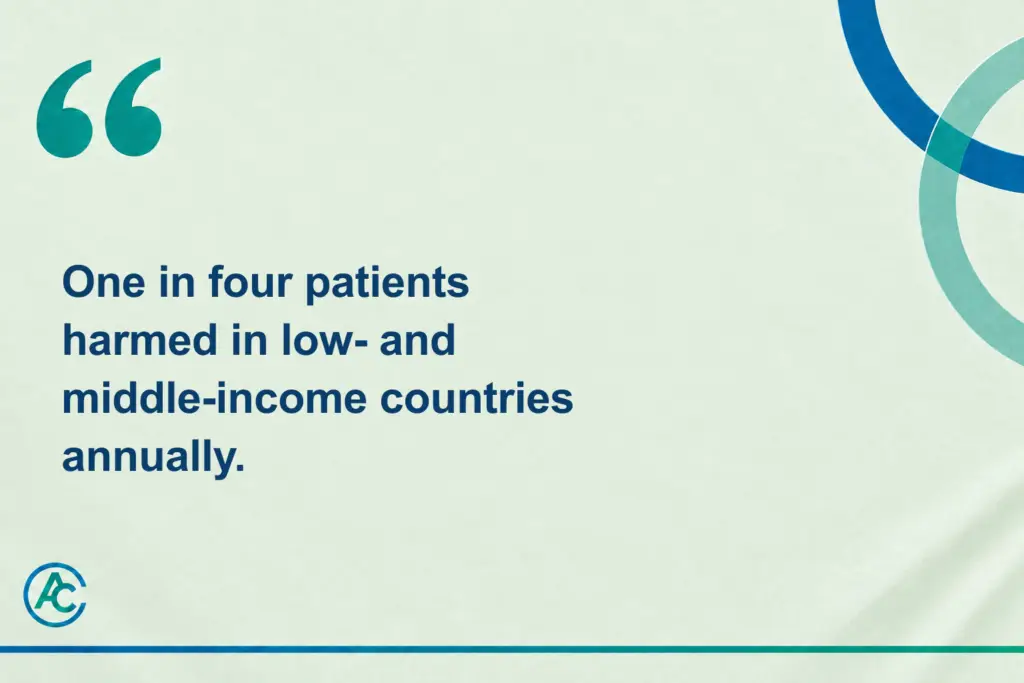
The standards exist because the baseline is grim. The WHO Global Patient Safety Action Plan 2021-2030 cites research showing that roughly one in ten patients experiences an adverse event during hospital care in high-income countries, and in low- and middle-income countries, up to one in four patients is harmed, with 134 million adverse events annually contributing to around 2.6 million deaths. The WHO also notes that up to 15% of hospital expenditure in high-income countries can be attributed to wastage from safety failures.
Domestically the pattern is just as pointed. The Joint Commission received 1,575 sentinel event reports in 2024, with patient falls accounting for 776 events (49%), followed by wrong surgery, delay in treatment, suicide, and unintended retention of a foreign object. The same report ties the leading contributors to familiar themes: communication breakdowns, handoff failures, and gaps between written policy and actual practice.
Award-winning organizations treat those numbers as a design brief. The seven strategic objectives of the WHO action plan (high-reliability systems, safety of clinical processes, patient and family engagement, and so on) map almost one-to-one to what a JCI surveyor expects to see in your IPSG evidence binder.
The CAPA and RCA habits the winners actually practice
Award recipients do not have better paper. They have shorter loops. When something goes wrong, the people closest to the work write it down, a root cause gets named within days (not months), and the corrective action is assigned to a human being with a deadline. The KK Women’s and Children’s Hospital “From Silence to Safety” initiative is a decade of that habit, compounded.
A few patterns show up repeatedly across the JCI recipient narratives and the TJC sentinel event taxonomy:
- Staff capture incidents quickly, without fear. People report near-misses because reporting is easier than not reporting, and nothing bad happens to the reporter.
- Teams name a system, not a person, in the RCA. The analysis follows the standard “5 Whys” and barrier-analysis logic the StatPearls Medical Error Prevention review describes, where contributing factors like incomplete surgical time-outs and shared mental model failures get called out explicitly.
- Owners track CAPA closure, not assume it. Every corrective action has a named person, a due date, a verification step, and a recurrence check 90 and 180 days out.
- Clinicians find evidence where the work happens. Policy, training completion, drill results, and incident trends sit in one place a surveyor can walk through without a scavenger hunt.
This is where a single-source-of-truth platform earns its keep. We built AccrediCulture so your incidents, grievances, EOC rounds, EM drills, chart audits, credentialing files, and CAPAs live in the same command center, with the IPSG and standards tags already attached. When a surveyor asks “show me the trend and what you did about it,” your team answers in three clicks, not three days.
How to benchmark your own program against award recipients
You do not need to be a 2,000-bed academic center to borrow from this cohort. Start with four comparisons you can run this quarter:
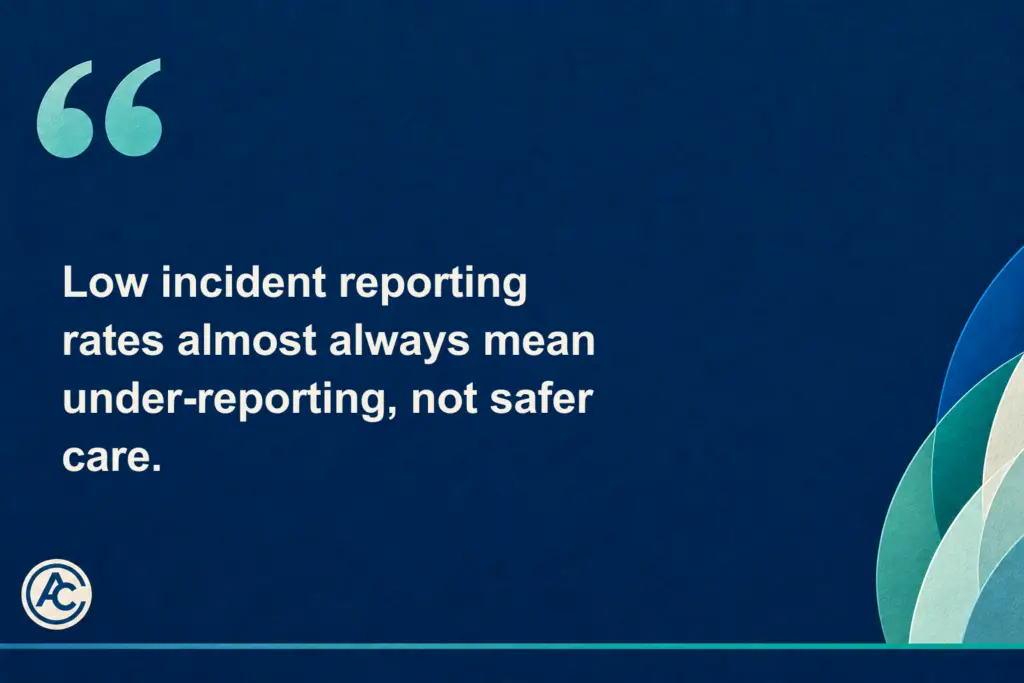
- Incident reporting rate per 1,000 patient days. Higher is usually better; it means your staff trust the system. Low numbers almost always mean under-reporting, not safer care.
- Average days from event to RCA completion. Award recipients tend to close the analytic loop in weeks. If yours runs in quarters, that is the first thing to fix.
- CAPA closure rate and recurrence rate. Count how many CAPAs closed on time, and how many issues came back within six months. Recurrence is the honest grade.
- IPSG-tagged evidence coverage. For each IPSG (patient identification, effective communication, medication safety, surgical safety, infection prevention, falls), can your team produce current policy, training records, audit data, and a sample incident with its CAPA in under five minutes?
If any of those feel shaky, that is useful information, not a verdict. Survey preparation is a tune-up, not a rescue mission. The same calm, consistent habits that produce a JCI award also produce a quiet survey week.
Frequently asked questions
What are the JCI Global Patient Safety Awards and who is eligible?
They are a new JCI recognition program for healthcare organizations and national health authorities outside the United States that demonstrate innovative, measurable, and transferable improvements in patient safety. The inaugural program recognizes excellence in patient safety and healthcare quality for organizations outside the US, with nominations evaluated on innovation, effectiveness, scalability, sustainability, and transferability.
How do JCI award criteria map to the International Patient Safety Goals and standard EP evidence?
Winning submissions tie each intervention to one or more IPSGs and show the standard chain of evidence a surveyor expects: policy, training, measurement, and corrective action. Treat the awards as a template for how your IPSG binder should read.
What CAPA and root-cause analysis practices do award-winning hospitals share?
Fast capture, non-punitive reporting, system-level root cause (not individual blame), named CAPA owners with due dates, and a verification step that checks whether the fix actually held. Teams commonly track recurrence at 90 and 180 days.
How should a compliance officer benchmark incident reporting rates against award recipients?
Use rate per 1,000 patient days and watch the trend, not the raw count. Compare against AHRQ Hospital Survey on Patient Safety Culture (SOPS) benchmarks for non-punitive response and reporting frequency. If staff are not reporting, fix the culture before the metric.
What continuous readiness workflows separate award-winning organizations from everyone else?
Leaders at award-winning hospitals keep one source of truth for incidents, policies, EOC rounds, credentialing, and CAPAs; they run monthly mock tracers; their staff tag evidence to standards as it is created; and executives read the trend reports every month. Survey week should never be the first time anyone opens the binder.
References
- Joint Commission International Launches Global Patient Safety Awards (JCI, April 2026)
- JCI Honors Inaugural Global Patient Safety Award Winners (PR Newswire, September 30, 2026)
- WHO Global Patient Safety Action Plan 2021-2030 (full PDF)
- WHO Global Patient Safety Action Plan overview
- The Joint Commission Sentinel Event Data 2024 Annual Review
- StatPearls: Medical Error Prevention and Root Cause Analysis
- AHRQ Hospital Survey on Patient Safety Culture (SOPS)