
Mental Health Environment of Care Checklist: What Surveyors Actually Look For
August 15, 2026
On this page
Ready to be survey-ready?
The short answer: what belongs on a mental health EOC checklist
A working mental health environment of care checklist covers seven things: a documented ligature and self-harm risk assessment, fire and life safety, hazardous materials and waste, security and access control, medical equipment, utilities, and emergency management drills. Everything else is a sub-item under one of those seven. If your checklist has 40 categories, you have a filing problem, not a compliance program.
Behavioral health operators keep asking me for a magic list. The list is not the hard part. The hard part is the evidence trail behind each line item, dated, signed, closed out, and pullable in under two minutes when a Joint Commission surveyor points at a door hinge and asks when it was last inspected. Joint Commission guidance on non-inpatient behavioral health settings is clear that even PHP, IOP, and residential programs must conduct an environmental risk assessment, identify hazards, and train staff on them, whether or not the setting is required to be ligature resistant.
So the checklist below is organized the way surveyors actually walk your building. Front door to back exit. Not the way the standards manual is organized.
What EOC violations actually cost (and why the checklist matters)

Operators often ask what an EOC finding really costs. Here is the real answer, from the public record.
In January 2026, Illinois settled a patient suicide case at a state mental health center for $10 million, and the evidence at the heart of the case was a protruding door hinge. Internal emails showed delays, missing equipment, and confusion over what money was needed or already spent to complete the anti-ligature project, and photos from the night of the death showed a protruding door hinge on the bathroom door, revealing the ligature risk remained. The Illinois Attorney General’s office called it the largest settlement of its kind in the past five years. One hinge. Ten million dollars.
That is not the only number worth putting in front of your board. In June 2025, a Kansas jury returned a $5.7 million verdict in a wrongful death case involving the negligent discharge of a patient who was experiencing an acute mental health crisis. A 2016 Connecticut jury awarded more than $12 million against a hospital and psychiatric APRN, holding the hospital 65% responsible and the nurse 35% responsible for a patient suicide. On the federal side, OIG hit Central Florida Behavioral Hospital for $26,744.55 under the Civil Monetary Penalties Law for employing an excluded individual, a credentialing miss, not an EOC miss, but the same operational failure: the checklist existed and nobody ran it.
The EMTALA data is worth naming too. A peer-reviewed analysis found that nearly one in five civil monetary penalty settlements related to EMTALA violations involved psychiatric emergencies, and settlements related to psychiatric emergencies were more costly and more often associated with failure to stabilize than for nonpsychiatric emergencies. Regulators are not guessing. Plaintiff attorneys are not guessing. Your checklist should not be either.
The checklist, walked the way a surveyor walks it
Here is the working list we hand to operators preparing for a Joint Commission or CARF survey. Structure it inside your compliance platform so every item has an owner, a frequency, a last-completed date, and an attached artifact.
1. Ligature and self-harm risk assessment. Every patient care area. Door hardware, hinges, closet rods, grab bars, shower fixtures, cords, HVAC grilles, ceiling fixtures. Common risks include power cords on medical equipment, call bell cords, hand rails, doors, door knobs, door hinges and hardware, shower heads and curtains, exposed plumbing or piping, paper towel and soap dispensers on walls, electrical switches and receptacles, lighting fixtures, and projections from ceilings. Even non-inpatient BH programs need this on file. This is required by standard EC.02.01.01 and is frequently cited by behavioral health surveyors when the organization has not completed this type of environmental risk assessment.
2. Fire and life safety. Fire drills per shift, per quarter. Extinguisher inspections. Sprinkler and alarm testing per NFPA. Egress paths clear. Door closers working.
3. Hazardous materials and waste. SDS binder current and accessible. Sharps disposal. Chemical storage locked. Medication rooms secured.
4. Security and access control. Badge system. Visitor log. Elopement risk protocols. Camera coverage documented. Termination-to-EMR-removal time under 24 hours (we hold ourselves to under 10 minutes).
5. Medical equipment. Preventive maintenance current. AED batteries and pads in date. Biomed inventory reconciled.
6. Utilities. Generator load tests. Emergency power for life safety branches. Water temp logs. HVAC maintenance.
7. Emergency management. Two exercises per year minimum. Hazard vulnerability analysis updated annually. Continuity of operations plan tested, not just written.
Every item gets a check, a date, an initial, and an attachment. If a surveyor asks and you cannot produce the artifact in the moment, it is a finding.
Where operators actually get cited, and how to close the gap
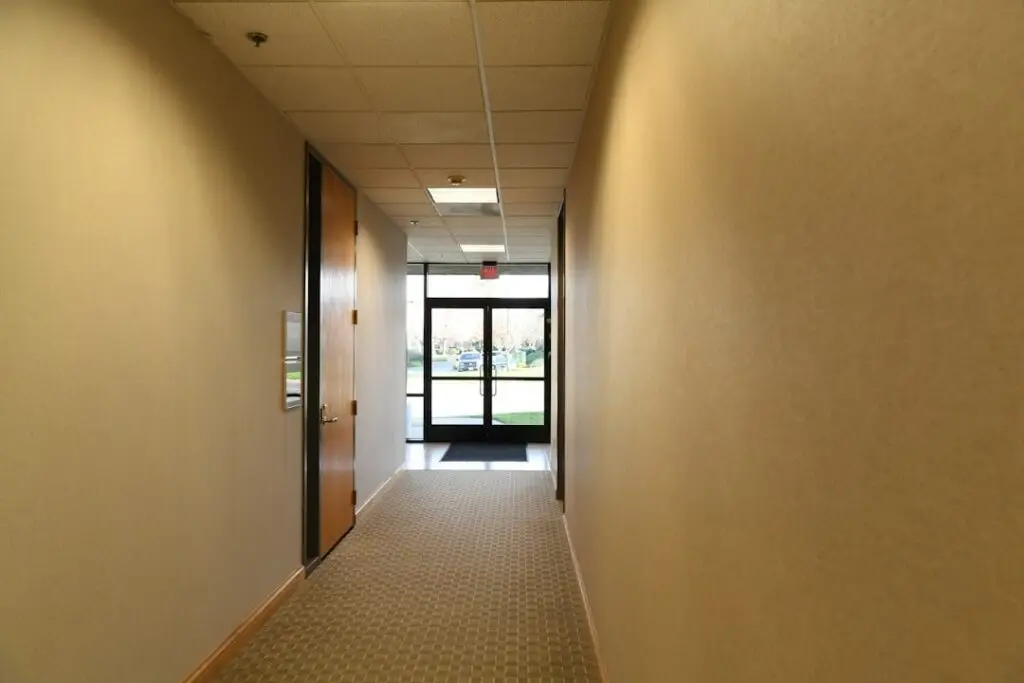
A checklist is only survey-ready if the cadence is documented and the evidence is retrievable. This is the operator-side gap most static PDFs leave open. Here is how we sequence it inside AccrediCulture for a 30-bed inpatient psychiatric unit in a state like Pennsylvania or Arizona, where DOH behavioral health licensure divisions have run frequent unannounced visits.
- Every shift: Patient safety rounds at assessed intervals. Contraband sweep after visiting hours. Signed by the RN of record.
- Daily: EOC tour of the unit with ligature-risk visual scan. Any new finding entered directly into a corrective action plan with an owner and a 60-day clock, because if a surveyor finds a ligature-risk deficiency, CMS allows 60 days to correct it, and these risks are not eligible for Life Safety Code waivers because they are not LSC deficiencies.
- Weekly: Chart audit sample pulled against NPSG.15.01.01 EPs. C-SSRS documentation traced across admission, mid-stay, and discharge.
- Monthly: EM drill or code response drill logged with debrief. Grievance and incident trends reviewed for environmental contributors.
- Annually: Full ligature-risk assessment refreshed. Mock survey against EC.02.06.01, NPSG.15.01.01, and 42 CFR 482.13. CAP loop closure verified with root cause analysis.
The artifacts a surveyor will ask for: the rounding log, the risk register with mitigations, the training completion roster, the drill after-action report, and the closed-loop CAP. Not a policy binder. Evidence that people did the work. CMS requires hospitals to provide education and training to all new staff initially upon orientation, whenever policies and procedures change, and at least every two years. Put that training log next to the rounding log. Same folder. Same command center.
Frequently asked questions
Does a non-inpatient behavioral health program (PHP, IOP, outpatient) need a ligature risk assessment?
Yes, an environmental risk assessment is required, even though the setting itself does not need to be ligature resistant. National Patient Safety Goal 15.01.01.01 EP 1 in the Behavioral Health Care and Human Services standard makes clear that non-inpatient BH programs must conduct an environmental risk assessment, and that non-inpatient behavioral health care and human services settings and unlocked inpatient units do not need to be ligature resistant. Document the risks, train staff on them, and keep the record current.
How often should we run EOC tours?
Joint Commission expects EOC tours at a frequency defined by your own policy and matched to your setting. Most inpatient behavioral health programs run monthly tours of patient care areas and semiannual tours of non-patient areas. Residential and outpatient programs usually run quarterly. Whatever cadence you set in policy, hit it, and document it.
What is the single most cited EOC standard in behavioral health?
EC.02.01.01, the environmental risk assessment standard, is one of the most frequently cited when the assessment is missing, stale, or lacks a follow-through plan on identified risks. Florida AHCA, Texas HHSC, and other state regulators pull on the same thread when they inspect.
How does AccrediCulture help with the EOC checklist specifically?
We give operators one place to run every EOC tour, drill, risk assessment, and corrective action plan, with owners, due dates, and attached artifacts. When a Joint Commission or CARF surveyor asks for the last four quarters of ligature risk assessments, you pull them up in a click. That is the difference between survey-ready and survey-week panic.
References
- Joint Commission: Ligature and/or Suicide Risk Reduction, Environmental Risk Assessment Expectations in Non-Inpatient Behavioral Health Care Settings
- CBS Chicago: Illinois settles for $10 million following a patient suicide at a state mental health center
- Shamberg, Johnson & Bergman: $5.7 Million Verdict Secured in Suicide Malpractice Trial (June 2025)
- HHS OIG: Central Florida Behavioral Hospital $26,744.55 CMP settlement
- PMC: Civil Monetary Penalties Resulting From EMTALA Violations Involving Psychiatric Emergencies, 2002 to 2018
- CMS: Civil Monetary Penalties (Annual Inflation Adjustments)
- Florida Agency for Health Care Administration (AHCA)
- Healthcare Facilities Today: Compliance 101, Mitigating ligature risks in behavioral health patient care environments